Chiang Mai Food Guide 2026: Lanna dishes, night markets and the Walking Street
Chiang Mai sits in northern Thailand and is the centre of Lanna cooking, where a street bowl of khao soi costs 50 to 70 baht. Travellers who want all 5 signature dishes should allow 3 days; the old town is walkable at about 1.5 km across. The prices below are typical ranges, so confirm what is posted in each shop.
The city divides into 4 food districts. The old town holds traditional shops and canteens with dishes mostly 40 to 60 baht. Nimman, about 1.5 km from the western gate, is the café and modern-cooking quarter. Thapae Road concentrates the night markets and the Sunday Walking Street. The east bank of the Ping River is the riverside restaurant strip, running about 50% above old-town prices.
Meal times: small shops close by 14:00
Traditional Chiang Mai shops trade through breakfast and lunch. Khao soi and khanom jeen places typically open at 08:00 and sell out by 14:00, and most do not open in the evening. The markets and walking streets only start at 17:00, so the two barely overlap. To cover both in a day, put the small shops before noon and confirm hours with each one.
Spice levels and the weight of pork
Northern food is milder than southern Thai, but nam prik num and nam ngiao are inherently spicy and cannot be toned down. Lanna cooking uses a lot of pork: 3 of the 5 signature dishes are pork-based. Vegetarian stalls carry the Thai character เจ and the old town has about 10 vegetarian restaurants; confirm availability with each vendor.
High season and smoke season in 2026
November to February is the cool season and the peak, with daily highs around 29°C and the busiest markets. March and April are the smoke season, when the air quality index often exceeds 150 and outdoor seating is less pleasant. Rainy-season storms from May to October cluster between 15:00 and 18:00 and can shorten the walking streets, so check the Chiang Mai municipal notices.
Getting between Chiang Mai's food districts
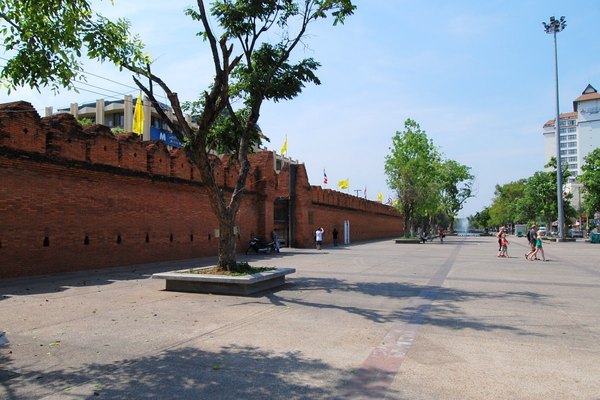
Chiang Mai has no rail network, so the districts are linked by songthaew, ride-hailing and scooter. The old town is walkable; crossing between districts usually means a songthaew. The ranges below are typical, so agree the fare before you board.
Songthaew: 30 to 50 baht per trip in town
Red songthaews are the city's standard transport at 30 to 50 baht per trip, with the old town to Nimman about 40 baht and 10 minutes. There are no fixed routes or stops: state your destination and agree the price before getting in.
After 22:00 a 20 baht surcharge is common and vehicles thin out. For a group, chartering one runs about 150 to 300 baht per trip. Fares are negotiated rather than metered, so confirm the amount and whether it is direct before boarding.
Ride-hailing: 60 to 90 baht with a fixed quote
Ride-hailing covers Chiang Mai well, with the old town to Nimman at 60 to 90 baht — about 50% above a songthaew but quoted in advance with no haggling. Peak surcharges between 17:00 and 19:00 commonly reach 1.3 times.
The drawback is the old town's one-way lanes, where driver pins can land 50 to 100 metres off, so deep sois need a short walk to meet them. Platform rates move by time of day, so check the live quote in the app before confirming.
Scooter rental: 200 to 300 baht a day
Scooters rent for 200 to 300 baht a day and give the most flexibility for late-night eating. Riding without an international permit draws a fine of about 500 baht, and deposits are commonly 2,000 baht or a passport. The old town has 4 gates and 5 main junctions, mostly one-way.
Lanes are slick in the rainy season and parking near the markets is scarce after 18:00. Most policies exclude unlicensed riders, so confirm the cover and deposit terms before renting.
The 12 dishes and 4 districts worth your time
These are listed by dish and then by district, with prices and typical hours. Prices and hours change, so confirm what is posted in each shop.
Khao soi: the bowl Chiang Mai is known for
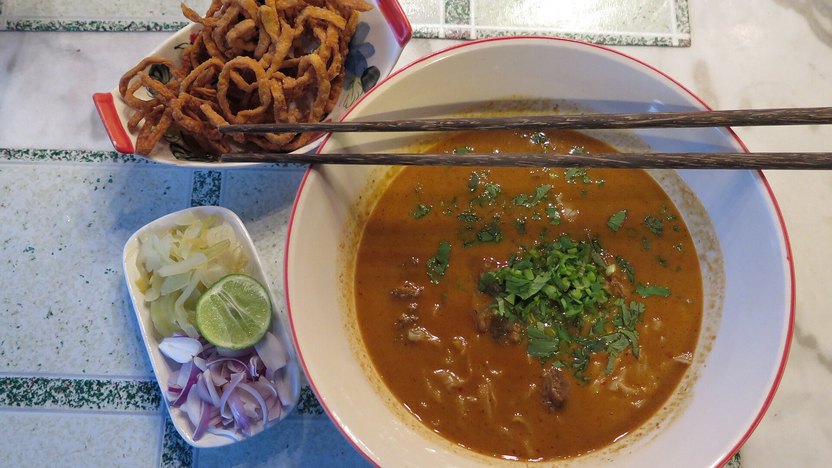
Khao soi is the city's signature dish — a coconut curry broth with chicken or beef, topped with crisp fried noodles and served with shallots, pickled greens and lime, 3 condiments in all. Street shops charge 50 to 70 baht; tourist-area storefronts run 90 to 150 baht.
Most shops open at 08:00 and sell out by 14:00, with no evening service. The heat comes from the chilli oil served alongside, which you can decline. Prices and sell-out times vary by shop, so aim to arrive before 12:00.
Sai ua: grilled northern sausage, 20 to 35 baht
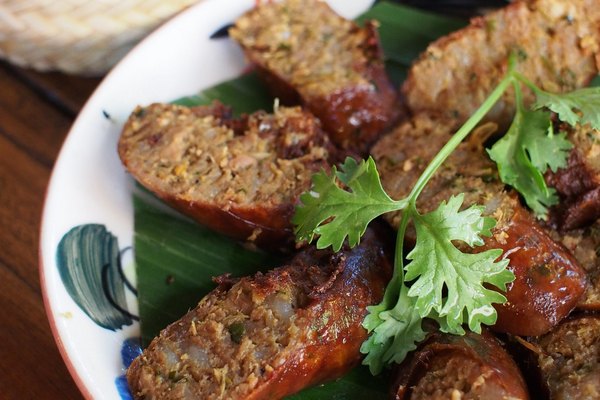
Sai ua is pork blended with lemongrass, galangal and chilli, coiled into a spiral, grilled over charcoal and cut into lengths at 20 to 35 baht a skewer. Market stalls trade 07:00 to 16:00; night-market versions start after 17:00.
It contains chilli at a fixed level that cannot be adjusted, and there is no non-pork version. Vacuum-packed sausage travels and keeps about 3 days unrefrigerated. Confirm the shelf life and whether it can be checked into luggage with the vendor.
Nam prik num: the green chilli dip
Nam prik num is roasted green chilli pounded with shallots and garlic, served with pork crackling and blanched vegetables at 40 to 60 baht a portion. It usually appears alongside nam prik ong, the tomato and minced pork dip, and the pair together runs about 100 baht.
It is inherently spicy and the heat cannot be dialled down. Pork crackling softens quickly, so eat it fresh. Portion sizes and what comes with them vary by shop, so confirm whether crackling is included when ordering.
Kaeng hang le: the Burmese-influenced pork curry
Kaeng hang le is pork belly simmered with tamarind and turmeric for about 2 hours, carrying Burmese spicing and little heat, at 60 to 90 baht a portion. It is common in old-town canteens and market deli counters.
It is usually a lunch dish and often sells out after 14:00. The fat content is high and one portion comfortably feeds 2. Serving times and portion sizes vary by shop, so confirm what is available.
Khanom jeen nam ngiao: the tomato and pork blood noodle
Khanom jeen nam ngiao is a broth of tomato, pork blood and fermented soybean over rice noodles, found only around Chiang Mai and Chiang Rai, at 40 to 60 baht a bowl. The colour is red but the heat is moderate, and it comes with bean sprouts and cabbage.
It contains pork blood, so ask first if you avoid offal. Most shops trade 08:00 to 15:00 and some serve only on weekdays. Serving days vary, so confirm the opening days before you go.
Mango sticky rice: 60 to 120 baht a plate
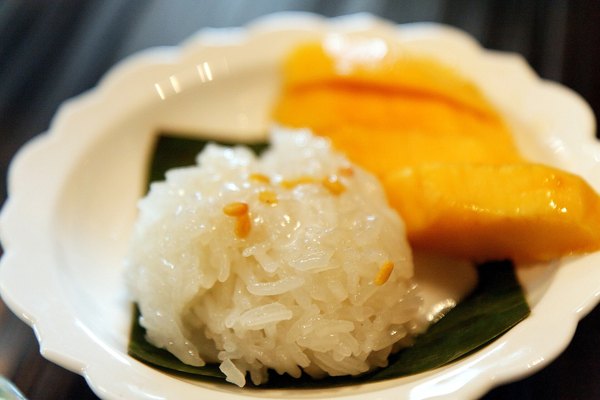
Mango sticky rice pairs coconut sticky rice with fresh mango and a scatter of fried mung beans at 60 to 120 baht depending on how much fruit you get. The season runs March to June, when prices are lowest and the fruit sweetest.
Out of season most shops use chilled or imported mango and prices rise about 30%. The sticky rice is made daily and does not keep to the next meal. Prices move with the season, so check what is posted in the shop.
Cha yen: Thai iced tea, 25 to 50 baht
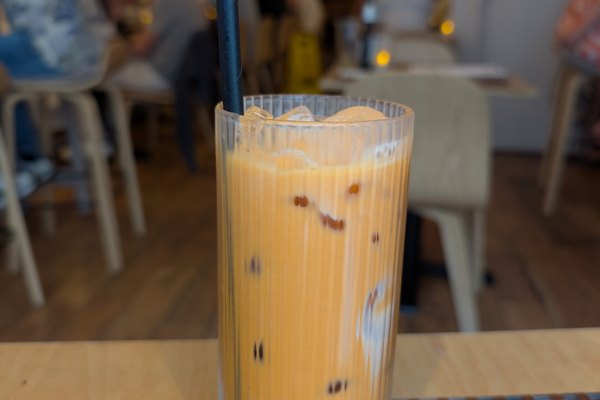
Cha yen is black tea with condensed and evaporated milk, 25 to 35 baht from a street cart and 40 to 50 baht in a café. Most carts will halve the sugar on request.
Sugar content is high, at roughly 30 grams a cup. Ice is usually factory-made and safe, though loose ice sold on the street is better avoided. Whether sugar and ice can be adjusted varies by vendor, so confirm when ordering.
Chiang Mai Night Bazaar: 17:00 to 24:00 nightly
The Night Bazaar runs along Chang Khlan Road from 17:00 to 24:00 nightly, with food concentrated in 2 courtyards and dishes mostly 40 to 80 baht. Seating is communal, with roughly 200 places.
Crowds peak between 19:00 and 21:00, when orders can take 15 minutes or more. The stall mix changes daily and rain can close it early, so check conditions on arrival.
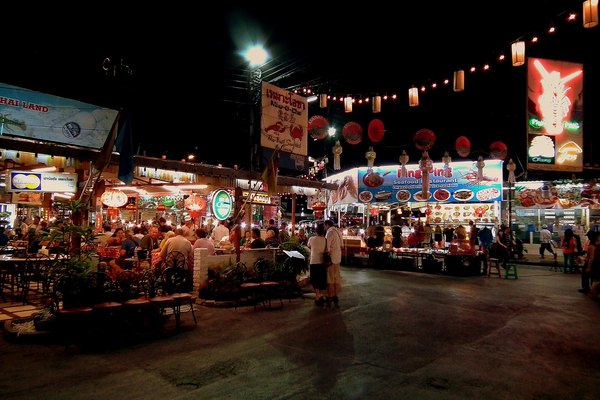
Sunday Walking Street: 16:00 to 22:00
Thapae Road's Sunday Walking Street runs about 1 km, setting up around 16:00 and winding down by 22:00. It is the city's largest weekend market, with food concentrated in 3 temple courtyards and dishes at 30 to 60 baht.
Crowds peak between 18:00 and 20:00 and the courtyard seating fills. Royal events or heavy rain can shorten or cancel it, so check the Chiang Mai municipal notices before setting out.
Saturday Walking Street: smaller and less crowded
The Saturday market runs along Wualai Road for about 700 metres, roughly 60% the size of the Sunday one, from 17:00 to 22:00, with about 40 food stalls at 30 to 50 baht a dish.
Because it is quieter, waits are usually under 5 minutes. Stall counts and hours are set by the organisers and change, so confirm for the week you visit.
Nimman: the densest café quarter
Nimman sits about 1.5 km from the old town's western gate, and its sois 1 to 17 hold the city's densest café scene at roughly 80 venues. Coffee runs 70 to 120 baht a cup and food about 50% above old-town prices.
Most cafés trade 08:00 to 18:00, so dinner options are thinner, and popular places fill after 14:00 at weekends. Hours and waiting times vary, so confirm with each venue.
Old-town canteens: 3 or 4 dishes in one sitting
Old-town canteens usually serve all 5 signature dishes at once, so you can try 3 or 4 in a sitting for about 150 to 250 baht a head. They cluster within about 1.2 km between Wat Phra Singh and Thapae Gate.
Most trade at lunch and close by 14:00, with no evening service. The daily selection changes, so confirm what is being served if you are after a particular dish.
What eating in Chiang Mai costs
A day of small shops and markets runs about 300 to 500 baht a head; adding cafés and a riverside dinner takes it to 800 to 1,200 baht. These are typical figures and vary by venue. The ranges below are typical across booking platforms, so confirm the live rate before booking.
Northern cooking classes: 900 to 1,500 baht for a half day
Half-day northern cooking classes run about 900 to 1,500 baht and full days 1,500 to 2,200 baht, usually including a market visit, 4 or 5 dishes and hotel transfer, over 3 to 6 hours. Most are taught in English.
Whether transfers and ingredients are included drives most of the price difference, so confirm before booking. Vegetarian or no-pork versions need about 24 hours' notice; confirm with the operator.
Markets and walking streets: no entry fee, cash only
The Night Bazaar and the Saturday and Sunday walking streets — 3 markets in all — charge no entry and trade mostly in cash, with low digital-payment coverage. Carry 20 and 100 baht notes; most stalls charge 30 to 80 baht a dish.
Some stalls will not accept 1,000 baht notes. ATM withdrawal fees run about 220 baht per transaction and vary by card issuer, so confirm with your bank.
Where to stay for a Chiang Mai food trip
Your base decides which hours you can reach: the old town for the morning shops, Nimman for the cafés, Thapae Gate for the markets. All 3 sit within 2 km of each other.
Inside the old town: walk to most traditional shops
The old town is about 1.5 km across, putting most khao soi and khanom jeen shops within a 15-minute walk, with the Sunday Walking Street inside the same area. Rates are the lowest of the 3 areas, often about 20% below Nimman.
The downside is the lanes: mostly one-way, with ride-hailing pins landing up to 100 metres off, and evening dining is limited. Confirm actual walking distances on a map. Best for a traditional-food itinerary.
Nimman: closest to the cafés, pricier dinners
Nimman puts about 80 cafés within a 10-minute walk and has the widest range of food overall. The downside is price, roughly 50% above the old town, and the 1.5 km to the Sunday Walking Street means about 10 minutes by car.
Dinner commonly runs 400 to 600 baht a head. Prices and hours vary by venue, so confirm with each one. Best for café-led trips.
Thapae Gate: closest to the markets
Thapae Gate sits on the old town's eastern edge, about 5 minutes on foot from the start of the Sunday Walking Street and about 800 metres, or 10 minutes, from the Night Bazaar, with a high density of convenience stores.
The downside is Sunday itself: the streets close to traffic after 16:00, so luggage has to be carried in on foot that day. Closure times are set by municipal notice, so confirm for your arrival date.
Food safety and water: stick to bottled
Chiang Mai tap water is not recommended for drinking; bottled water costs 7 to 15 baht. Street ice is usually factory-made and relatively safe, though loose ice sold on the street is better avoided.
Raw dishes and unpeeled fruit carry more risk, so favour food cooked to order. Hygiene varies widely between stalls; choose busy ones that finish their prep within the day. Bottled water prices vary by shop, typically 7 to 10 baht at convenience stores.
FAQ
Q. Which Chiang Mai dishes should I prioritise?
Khao soi, nam prik num with pork crackling, sai ua sausage, kaeng hang le and khanom jeen nam ngiao are the 5 Lanna staples. Most small shops serve only 2 or 3 of them, so the night markets or an old-town canteen are the places to try several in one sitting.
Q. What does street food cost in Chiang Mai?
A street bowl of khao soi runs 50 to 70 baht, sai ua is 20 to 35 baht a skewer, and night-market dishes mostly fall between 40 and 80 baht. Nimman and tourist-area storefronts often run 50% higher; confirm prices posted in each shop.
Q. What time does the Sunday Walking Street open and close?
Thapae Road's Sunday market sets up around 16:00 and winds down by about 22:00, with the heaviest crowds between 18:00 and 20:00. Royal events or heavy rain can shorten or cancel it, so check the Chiang Mai municipal notices before you go.
Q. How do I ask for less spice?
You can ask for no chilli or for the chilli paste on the side, but nam prik num and nam ngiao are inherently spicy and cannot be adjusted. Northern food is milder than southern Thai overall, so khao soi and kaeng hang le are the gentler starting points.
Q. What are the options for vegetarians or non-pork eaters?
Lanna cooking leans heavily on pork, and sai ua and kaeng hang le have no substitute version. Vegetarian stalls are marked with the Thai character เจ, and the old town has about 10 vegetarian restaurants, with the widest choice during the October vegetarian festival. Confirm with each vendor.
Q. How do I get between the food districts?
The old town is walkable at about 1.5 km across, and Nimman is about 1.5 km from its western gate. Red songthaews run 30 to 50 baht per trip in town; agree the fare before boarding. Ride-hailing over the same route runs 60 to 90 baht.