Bangkok Food Guide 2026: Boat Noodles, Chicken Rice and Michelin Stalls Explained
Bangkok's eating density concentrates in 4 districts: the old town and Yaowarat Road for long-established shops, the Sukhumvit corridor for restaurants, the Victory Monument area for the boat-noodle street, and mall basements for air-conditioned food courts. All 4 sit within 25 minutes of each other by BTS or MRT.
Prices fall into 3 bands: street stalls at 40 to 80 baht, food courts at 60 to 120 baht, and air-conditioned restaurants at 200 to 400 baht per person. A day of 3 stall meals comes to about 200 baht. Confirm prices against the posted list at each stall.
2026 eating hours: 3 stall peaks, old shops close by 15:00
Stall peaks fall between 07:00 and 09:00, 11:30 and 13:30, and 18:00 and 21:00. Long-established old-town shops mostly sell out and close between 15:00 and 16:00, while stalls on Yaowarat Road only open after 18:00 and trade until around 24:00. Confirm hours with each venue.
The 4 food districts: within 2 stations on the BTS or MRT
The boat-noodle street by Victory Monument packs about 10 shops into 300 metres, 5 minutes on foot from BTS Victory Monument. The Yaowarat Road food belt runs about 1.5 km, 2 minutes on foot from MRT Wat Mangkon. Asok to Ekkamai in Sukhumvit covers 4 stations in 6 minutes. Food courts cluster in the basements of 4 malls around Siam.
Hygiene and water: bottled water at 7 to 15 baht
Bangkok tap water is not recommended for drinking; bottled water costs 7 to 15 baht and the city has over 10,000 convenience stores. Stall ice is mostly factory-made and relatively safe. Raw salads and unshelled seafood carry more risk, so stalls cooking to order with high turnover are the safer pick. Those with sensitive stomachs should carry medication. Confirm bottled water prices as posted.
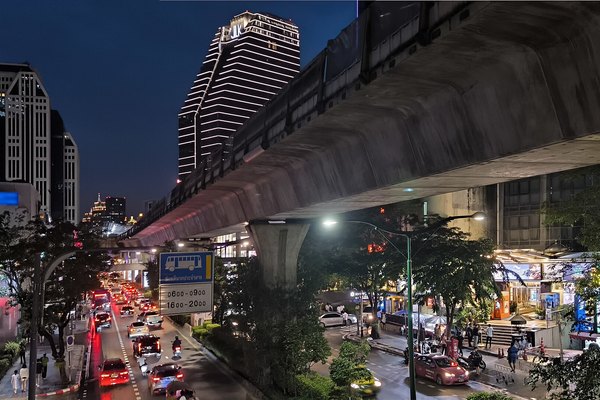
Reaching Bangkok's food districts: 3 options and what they cost
All 4 districts sit on rail lines, with single fares of 17 to 62 baht on the BTS and 17 to 45 baht on the MRT. Peaks run 07:30 to 09:30 and 17:00 to 19:30, when surface traffic is slowest. Confirm fares against current station notices.
BTS: 4 stations covering 3 restaurant belts
Asok, Phrom Phong, Thong Lo and Ekkamai on the BTS Sukhumvit Line cover 4 stations in about 6 minutes for about 23 baht, the densest restaurant stretch in the city, with more than 50 venues often sitting within walking range of a single station. Last trains mostly fall around 24:00, so confirm at the station.
MRT Blue Line: Chinatown and the old-town shops
The exits at MRT Wat Mangkon open onto the Yaowarat Road food belt, and Sanam Chai for the old town is 2 stations further, about 4 minutes. Asok in Sukhumvit to Wat Mangkon takes about 20 minutes for about 40 baht. Confirm fares and last-train times at the station.
Boats and walking: riverside shops via the piers
The orange-flag express boat on the Chao Phraya costs about 16 baht a trip and calls at 20 piers, with Tha Tien and Tha Chang both serving the old-town shop clusters within 10 minutes on foot. Last boats mostly fall around 18:00, so dinner needs a taxi. Confirm fares and headways against pier notices.
What to eat in Bangkok in 2026: 10 dishes and venue types
These are grouped by dish, each with typical prices and serving hours. Prices and hours can change, so confirm the posted notice at each venue.
Boat noodles: small bowls at 15 to 25 baht
Boat noodles were originally sold from canal boats and the bowls hold only about 100 millilitres, with a broth built on pork blood and spices, at 15 to 25 baht a bowl; locals commonly order 5 to 10 bowls at once. The Victory Monument area packs about 10 shops into 300 metres.
Most trade 09:00 to 20:00 and some old shops close once sold out. Crisp pork skin or meatballs add about 10 to 20 baht a portion. Four table condiments are adjusted by the diner. Confirm prices as posted at each shop.
Hainanese chicken rice: 50 to 60 baht, served all day
Hainanese chicken rice pairs poached chicken with rice cooked in chicken fat, at 50 to 60 baht a plate and about 80 baht for a large portion. The sauces lean on ginger paste and fermented chilli, making it one of the mildest dishes. Old shops in the old town and around Pratunam mostly open at 06:00.
Popular shops often mean a 20-minute wait between 11:30 and 13:00, and some well-known ones sell out before 14:00. Free refills of chicken broth are common, but confirm against the notice on site.
Pad thai: 60 to 80 baht, the night-market staple
Pad thai is fried with wide noodles, bean sprouts and dried shrimp, at 60 to 80 baht a plate, or about 120 to 180 baht with fresh prawns. Night markets and street stalls mostly serve it after 17:00, while mall food courts offer it all day.
Cooking takes about 3 minutes to order, which makes it one of the lower-risk choices. Peanut powder and chilli flakes come on the side. Confirm prices as posted at each stall.
Green papaya salad: from 50 baht, hard to de-spice
Green papaya salad is seasoned with shredded unripe papaya, fish sauce and lime, at about 50 to 70 baht a plate, or 80 to 120 baht with salted egg or pickled crab. It is pounded to order in about 2 minutes, but heat is counted in chillies and fixed before pounding.
It is a raw salad, so those with sensitive stomachs should pick stalls with high turnover. Pickled crab is raw-cured and carries more risk. Confirm ingredients and chilli count item by item when ordering.
Pork basil rice: 60 baht, the standard quick meal
Pork basil rice stir-fries minced pork with holy basil and chilli over rice with a fried egg, at about 60 to 80 baht a plate. It is served all day, is the most common dish at quick-service stalls, and takes about 3 minutes to cook.
The seasoning is mostly pre-mixed, so asking for no chilli may still arrive with some heat. A fried egg adds about 10 to 15 baht. Confirm prices as posted at each stall.
Tom yum: a sour-spicy broth from 120 baht
Tom yum is seasoned with lemongrass, galangal and lime, at 120 to 200 baht a bowl, or about 250 to 350 baht for the seafood version. Street stalls mostly make the clear version while restaurants often add coconut milk. Portions mostly serve 2.
At lunch some venues serve set menus only, and ordering à la carte means waiting 15 minutes or more. Heat can be adjusted on request, but sourness is mostly fixed. Confirm prices and portions against each menu.
Grilled chicken and sticky rice: 80 to 120 baht a portion
Grilled chicken is marinated in spices and cooked over charcoal, at about 80 to 120 baht for a half bird, with a bag of sticky rice at about 10 to 20 baht. Most are takeaway stalls clustered around markets and office districts, serving roughly 10:00 to 19:00.
The sweet-sour sauce comes bagged separately and is mild, which suits travellers avoiding chilli. Queues at charcoal stalls build after 11:30. Confirm hours and prices against each stall's notice.
Mango sticky rice: a seasonal dessert at 100 to 150 baht
Mango sticky rice pairs coconut-milk sticky rice with ripened mango, at 100 to 150 baht a portion. March to June is the mango season with the steadiest quality; other months mostly use chilled fruit. Mall dessert counters often charge twice the street price.
Street stalls mostly serve 10:00 to 20:00 and close once sold out. The sticky rice is steamed the same day and is not suited to keeping for a later meal. Confirm prices and seasonality against each venue's notice.
Thai iced tea and drinks: 25 to 60 baht
Thai iced tea is black tea with condensed milk, at 25 to 40 baht a cup from stalls and 50 to 60 baht from chains. Fresh juices and coconut water mostly run 40 to 60 baht, against 20 to 35 baht for bottled versions in convenience stores.
Street drinks are mostly made with loose ice, so bottled is the safer swap for sensitive stomachs. Sugar can usually be reduced on request, though the sweetness of a condensed-milk base is fixed. Confirm prices as posted at each stall.
Michelin stalls and food courts: 50 to 1,500 baht
More than 50 Bangkok street stalls appear in the Michelin guide, with single dishes from 50 baht up to 1,500 baht and well-known crab omelettes often at 800 to 1,500 baht. Most take no bookings, with waits of 60 to 120 minutes on the day.
Mall food courts charge 60 to 120 baht a dish, mostly seat over 300 and trade 10:00 to 22:00, which makes them the fallback in the rainy season and at midday. Confirm prices and waiting times against the notice on site.
What eating in Bangkok costs: price bands and bookings
The bands are wide: a street stall and an air-conditioned restaurant can differ fivefold per person. The ranges below are typical and move with season and exchange rates, so confirm prices as posted at each venue.
Daily food budget: about 200 baht on stalls, about 600 baht mixed
Three stall meals come to about 200 baht, swapping one for a food court about 300 baht, and swapping one for an air-conditioned restaurant about 600 baht. Drinks add 25 to 60 baht and bottled water 7 to 15 baht. Stalls in tourist areas often run about 30% above ordinary neighbourhoods, so confirm the price list before ordering.
Bookings and queues: 60 to 120 minutes at the known names
Michelin-listed venues mostly take no bookings, with waits of 60 to 120 minutes, so arriving 30 minutes before opening helps. Air-conditioned restaurants can be reserved through booking platforms, and weekend dinner slots often need 3 days' notice. Some venues add 10% service and 7% tax, so confirm whether those are charged on top before paying.
Where to stay for Bangkok's food: picking a zone by eating plan
The zone decides breakfast and late-night options: the old town or Chinatown for long-established shops, Sukhumvit for restaurants, Siam for air-conditioned choices at any hour. Cross-city hops at peak often take 60 minutes, so confirm drive times against the day's traffic.
Sukhumvit: the densest restaurants, open to 01:00
The 4 stations from Asok to Ekkamai hold the city's highest restaurant density, often more than 50 venues on a single stretch, with some trading to 01:00 and most convenience stores open 24 hours. The trade-off is fewer street stalls and prices about 30% above the old town. Confirm live rates on your booking platform.
Chinatown and the old town: old shops and late stalls
Stalls around Yaowarat Road open after 18:00 and trade until around 24:00, while old-town shops mostly open at 06:00 and close by 15:00, which covers both breakfast and a late supper. The trade-off is few air-conditioned restaurants and limited indoor seating in the rainy season; confirm hours with each venue.
Ordering and heat: settle the chilli count first
Heat is mostly fixed before cooking, and salads and basil dishes are hard to adjust afterwards. No-chilli requests work, but the saltiness of a fish-sauce or shrimp-paste base is fixed. English menus are common in tourist areas while old shops often have Thai and pictures only, so a phone translation helps. Confirm prices as posted and avoid unpriced verbal quotes.
Timing and kit: avoid the 11:30 and 18:00 peaks
The two queueing peaks fall between 11:30 and 13:30 and between 18:00 and 21:00, when waits at known venues can reach 120 minutes. Arriving at 10:30 or 14:30 saves most of that. Most stalls take cash only, so about 500 baht in small notes is worth carrying. Midday in the hot season can pass 40°C, so check the day's temperature before planning outdoor stalls.
FAQ
Q. What does a street-stall meal cost in Bangkok?
Single dishes mostly run 40 to 80 baht, boat noodles 15 to 25 baht a bowl, mall food courts 60 to 120 baht, and air-conditioned restaurants 200 to 400 baht per person. Three stall meals in a day come to about 200 baht. Confirm prices against the posted list at each stall.
Q. How can stall hygiene be judged?
Pick stalls cooking to order with high table turnover; raw salads and unshelled seafood carry more risk. Bottled water costs 7 to 15 baht, and stall ice is mostly factory-made and relatively safe, while loose roadside ice is better avoided. Those with sensitive stomachs should carry their own medication.
Q. Do Michelin street stalls take bookings?
Most street stalls do not, and waits on the day often run 60 to 120 minutes, so arriving 30 minutes before opening helps. Prices among guide-listed venues vary widely, with single dishes from 50 baht up to 1,500 baht, so confirm the price list before ordering.
Q. Which district is best for a late supper?
Stalls on Yaowarat Road mostly open after 18:00 and trade until around 24:00, while restaurants around Thong Lo and Ekkamai in Sukhumvit often run to 01:00. The old town mostly closes by 21:00, so confirm hours with each venue.
Q. How do you order without chilli?
Saying "mai phet" asks for no chilli, but salads and basil stir-fries are mostly seasoned in advance and hard to adjust. Hainanese chicken rice, grilled chicken with sticky rice and fried noodles are the 3 mildest options, with chilli usually supplied separately as a table condiment.
Q. What is there for vegetarians or those avoiding pork?
Thai vegetarian stalls carry a yellow "je" sign and cluster around Yaowarat Road, with dishes at 40 to 60 baht. Most broths and salads use fish sauce and shrimp paste, so confirm each ingredient when ordering rather than only asking whether a dish contains meat.